How Keap Can Enhance Your SaaS Business Efficiency and Growth
Ravi Chen
November 16, 2025
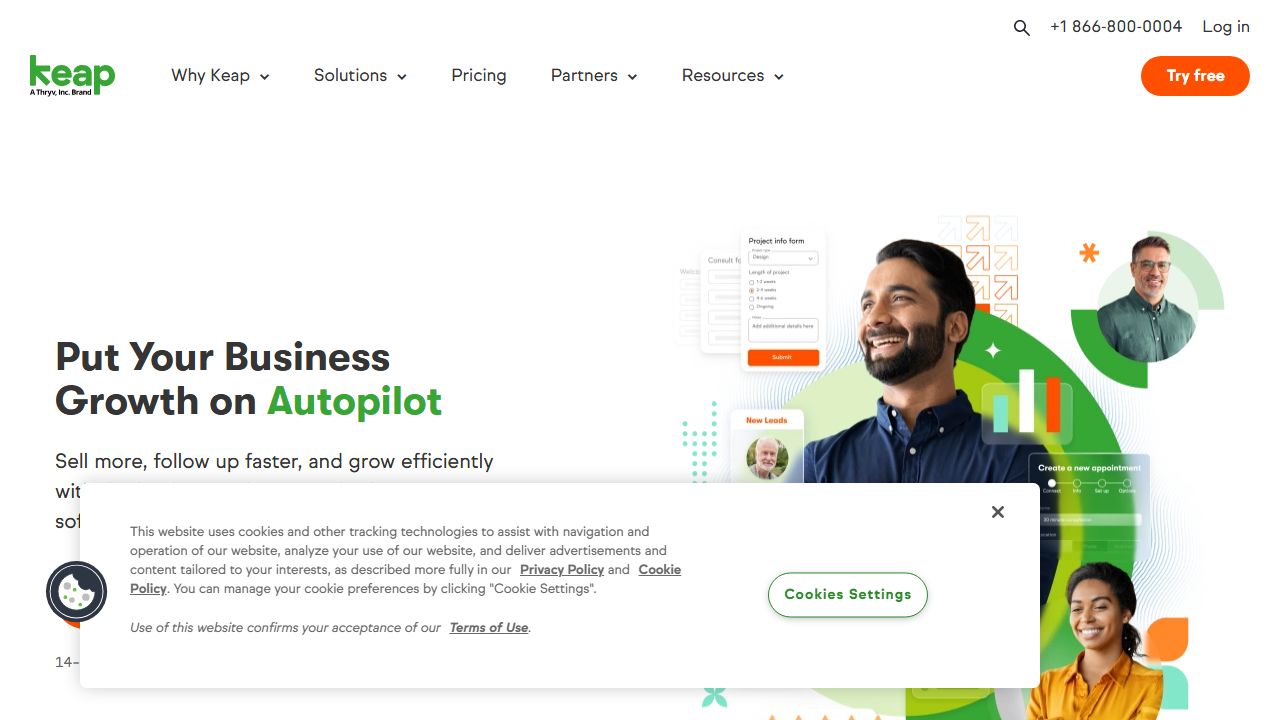
Technical Overview: Keap
Keap (formerly Infusionsoft) is built on a modern microservices architecture utilizing a combination of Ruby on Rails and Node.js for its core services. The platform employs a distributed system design that enables its signature marketing automation and CRM capabilities while maintaining scalability for small business needs. At its foundation, Keap leverages PostgreSQL for primary data storage, Redis for caching and real-time operations, and Elasticsearch for advanced search functionality. The system's design philosophy prioritizes reliability and ease of use while incorporating AI-driven automation capabilities through machine learning models running on TensorFlow.
Architecture & Design Principles
Keap's architecture follows a domain-driven design pattern, separating core business logic into discrete, maintainable services. The platform utilizes:
- ◆Event-driven architecture for handling marketing automation workflows
- ◆RESTful APIs for service communication
- ◆GraphQL for flexible client-side data querying
- ◆Container orchestration via Kubernetes for deployment and scaling
- ◆Message queuing through RabbitMQ for asynchronous processing
The system employs a multi-tenant architecture where each client's data is logically separated while sharing computational resources. This approach enables efficient resource utilization while maintaining strict data isolation. Performance optimization is achieved through strategic caching layers and database sharding for larger clients.
Feature Breakdown
Core Capabilities
- ◆
Campaign Builder Engine
- ◆Built on a proprietary workflow engine using directed acyclic graphs (DAGs)
- ◆Supports complex branching logic and conditional execution
- ◆Real-time event processing with sub-second latency
- ◆
Contact Management System
- ◆Implements specialized B-tree indexing for rapid contact lookup
- ◆Uses probabilistic data structures for duplicate detection
- ◆Maintains audit logs through append-only event sourcing
- ◆
Marketing Automation Pipeline
- ◆Leverages machine learning for lead scoring and segmentation
- ◆Implements parallel processing for bulk email operations
- ◆Uses predictive analytics for engagement optimization
Integration Ecosystem
Keap provides a robust API ecosystem built on REST principles with OAuth 2.0 authentication. The platform offers webhooks for real-time event notifications and supports both SOAP and REST protocols for legacy system compatibility. Key integration points include:
- ◆RESTful API with rate limiting at 1000 requests/minute
- ◆Webhook system supporting up to 100 concurrent connections
- ◆Native connectors for popular platforms (Shopify, QuickBooks, etc.)
- ◆Custom integration framework for bespoke solutions
Security & Compliance
The platform implements enterprise-grade security measures including:
- ◆SOC 2 Type II compliance
- ◆AES-256 encryption for data at rest
- ◆TLS 1.3 for data in transit
- ◆Role-based access control (RBAC)
- ◆Regular penetration testing and security audits
Performance Considerations
Keap's infrastructure is designed to handle:
- ◆99.99% uptime SLA
- ◆Average response time <100ms for API calls
- ◆Support for up to 100,000 contacts per account
- ◆Automated scaling during high-load periods
- ◆Geographic data replication for disaster recovery
Developer Experience
The developer ecosystem includes:
- ◆Comprehensive REST API documentation with interactive examples
- ◆SDKs for major programming languages (PHP, Python, Ruby, Node.js)
- ◆Developer sandbox environments for testing
- ◆Active developer forum with direct support channel
- ◆CI/CD pipeline templates for common integration patterns
Technical Verdict
Keap excels in providing a robust, scalable platform for small business automation needs. Its microservices architecture and event-driven design enable flexible customization while maintaining performance. The platform shows particular strength in handling complex marketing automation workflows and contact management at scale. However, the learning curve for full platform utilization is steep, and some advanced features require significant technical expertise to implement effectively. Ideal for small to medium businesses requiring sophisticated marketing automation with room for technical customization.